


TRX Training
You see two fighters locked in a battle, a dance of force and strategy. You wonder how they do it. The answer is technique. Mixed Martial Arts is not about brawling. It is a blend of boxing, Muay Thai, wrestling, and Brazilian Jiu-Jitsu.
This guide covers the core categories of mixed martial arts techniques: striking, takedowns, defense, clinch work, and submissions. Stick with us to build your foundation from the ground up.
TLDR; Here’s A Quick Read for You
-
Master the jab first. It measures distance and sets up every other strike.
-
Prioritize takedown defense. The sprawl is your best friend against grapplers.
-
Build functional strength. Your core and rotational power fuel every technique.
Essential Striking Techniques
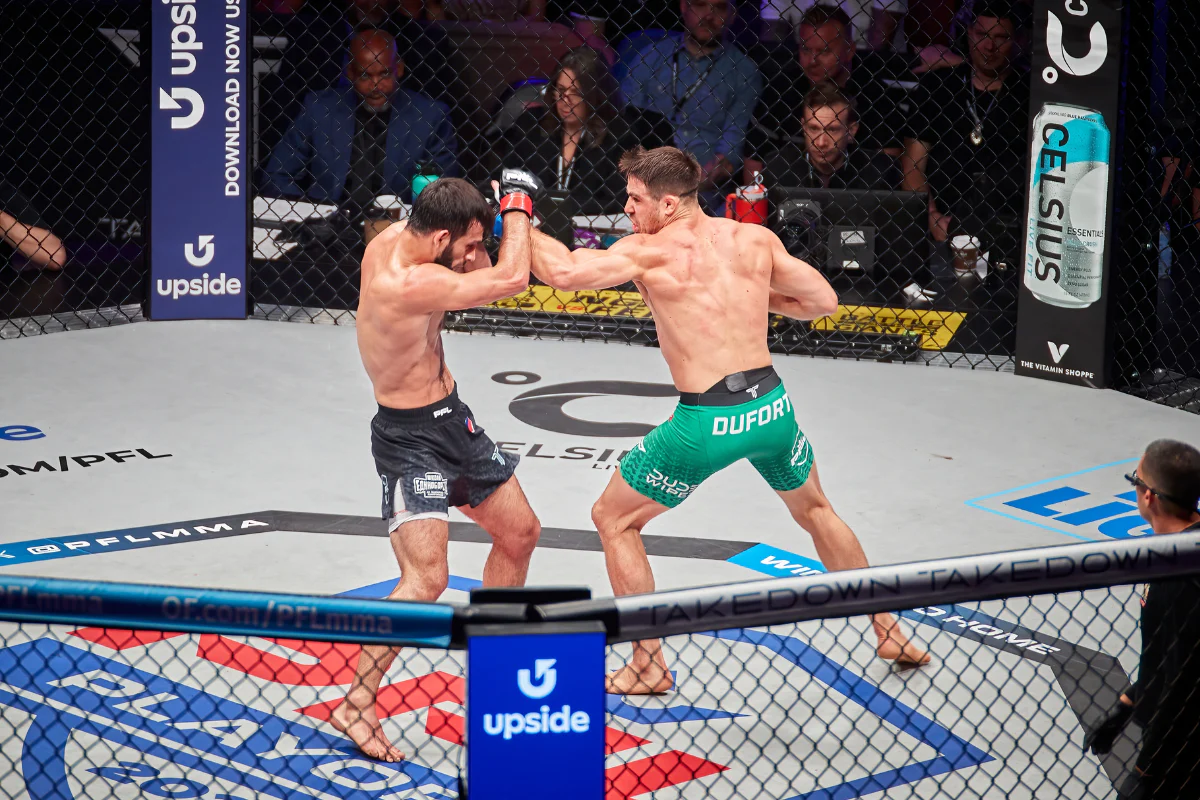
Striking forms the backbone of stand-up fighting in mma techniques. It comes from boxing and Muay Thai. Good strikers do more than hit hard — they manage distance and set up their attacks.
Beginners working on mma for beginners should master a few fundamental strikes first. Perfect your form before you expand your arsenal. Quality beats quantity every single time.
-
Land clean shots without losing balance.
-
Use strikes to control where the fight happens.
-
Set up one attack with another.
The Jab
Think of the jab as your measuring tape. It is a straight punch thrown with your lead hand. This simple move has many jobs. It gauges how far away your opponent is. It establishes a rhythm for your attacks.
It sets up every other punch in your toolbox. You can also use it defensively to push an opponent back. Anyone can learn a basic jab in one lesson. But mastering its timing and variations takes a lifetime of practice. Make this your most trusted tool.
How to Throw a Basic Jab:
-
Stand in your fighting stance.
-
Extend your lead hand straight out from your chin.
-
Rotate your fist so palm faces down at impact.
-
Snap your hand back to your face just as fast.
The Overhand
The overhand is a looping power punch. You throw it with your rear hand. It looks different from a traditional boxing cross. The motion is more like a windmill. Your fist comes over the top in a big arc. You move your head off the center line as you throw it.
This makes it effective in MMA. It works well against wrestlers who are shooting low for your legs. It can also close distance in an unexpected way. Do not overlook this awkward-looking powerhouse.
Common Overhand Scenarios:
-
Countering a low takedown attempt.
-
Closing the gap against a longer opponent.
-
Following up after a missed jab.
The Round Kick (Low Kick)
This is a Muay Thai-style technique. You strike with the lower part of your shin, not your foot. The mechanics are straightforward but powerful. Pivot your lead foot to turn it sideways. Thrust your hip forward to lead the kicking leg.
Rotate your whole body through the target. This generates serious force. Low kicks are a fundamental weapon in MMA. They damage your opponent’s legs over time. This disrupts their balance and limits their mobility. A compromised fighter is a controlled fighter.
Developing lower body durability also matters here. Incorporating knee strengthening exercises into your routine helps you both deliver and absorb low kicks more effectively. Strong knees are the foundation of powerful kicking mechanics.
Benefits of the Low Kick:
-
Damages the thigh muscle, slowing your opponent.
-
It is difficult to see and block.
-
Sets up higher head kicks later in the fight.
Takedown Techniques
Wrestling and takedowns control the fight. They decide if you’re standing or on the ground. A good takedown lets you impose your game.
It can neutralize a dangerous striker completely. Beginners with no wrestling background must start here. Without these skills, you are at the mercy of anyone who knows how to grapple. It is not optional — it is survival.
The Single-Leg Takedown
This is a foundational wrestling move and a core mma skill every beginner needs. You grab one of your opponent’s legs. You drive forward to off-balance them and bring them down. If you do not know this move, a skilled wrestler will dominate you.
But if you command it, you become a formidable opponent. Mastering the single-leg requires dedicated drilling.
-
Partner stands flat-footed.
-
Level change and secure the leg behind the knee.
-
Drive forward, lifting the leg to your chest.
-
Finish by stepping across and dropping your weight.
The Double-Leg Takedown
This is another fundamental technique. It involves a three-step process. First, you change your level by dropping a knee. Second, you take a penetration step to close the distance. Third, you shoot your hands behind both of your opponent’s legs.
You can place a hand behind each knee or clasp them together. This move is universally understood in MMA. Fighters from all disciplines practice it regularly.
Clinch and Ground Control
The clinch is the close-range battle, standing up. You are chest-to-chest, fighting for head position, underhooks, and body locks. This range is dominated by Muay Thai techniques.
Winning here means controlling posture so you can land knees, set up trips, or break away safely. It is exhausting and technical — a test of grit and know-how.
Once the fight hits the mat, control is everything. Positions like the guard, side control, and mount determine who can strike and who can submit.
Learning to establish and hold these positions is more important than chasing submissions early on. Control the person, then finish the fight.
If you want to build the pulling strength needed for clinch work, suspension-based upper body training develops real-world grip and postural control that translates directly to the cage.
Defensive Techniques
Defense is just as important as offense when learning mixed martial arts techniques. Failing to develop defensive mma skills leaves you wide open.
Takedown accuracy and takedown defense were moderately correlated, suggesting an interdependence between offensive and defensive grappling skills.
Beginners often skip defense to learn flashy attacks. This is a mistake. Strong defensive fundamentals separate competent fighters from vulnerable ones.
The Sprawl
This is your answer to a takedown. When someone shoots in, you do not back up. You sprawl. You kick your legs back, drop your hips hard to the mat, and drive your weight onto their back and shoulders.
It stops their momentum dead. A good sprawl does not just defend — it can put you in a dominant position, maybe on their back. It is the most important defensive move in MMA. Drill it until it is a reflex.
-
React to the shot by driving hips down.
-
Use your chest pressure to flatten them out.
-
Fight for underhooks to control what happens next.
The Back Mount Escape
Being caught with someone on your back is one of the worst spots in fighting. They have all the leverage for chokes. The first priority is protecting your neck, tucking your chin. Then you must work to get your back to the mat, turning into them.
You bridge, you shrimp, you trap an arm. It is a systematic fight to recover a safe position. Knowing how to escape is what gives you the confidence to risk going to the ground. It is the ultimate survival skill.
Escape Priorities:
-
Tuck your chin to protect your neck.
-
Trap one of their attacking arms.
-
Bridge and turn to get your shoulder to the mat.
-
Fight to get back to guard.
Submission Basics
Submissions end fights. A joint lock or a choke forces a tap. These come from Brazilian Jiu-Jitsu. Understanding what is a chokehold and how it functions is the first step for any beginner.
A choke hold works by restricting blood flow or airflow to the brain, forcing a tap-out before the opponent loses consciousness.
The most common mma choke hold beginners should recognize is the rear-naked choke — a blood choke that applies pressure to the carotid arteries.
A carotid choke hold like the rear-naked choke is considered the most effective submission in the sport, accounting for the majority of all choke finishes in professional fights.
For a beginner, the focus should not be on applying the fanciest chokes. It should be on recognition. Learn what an mma choke hold looks like — arm under the chin, a hand behind the head.
See how an armbar isolates the elbow. Feel the threat of a guillotine. Learn the basic principles of escape: protect the joint, relieve the pressure, create space. If you know what is coming, you can defend it. Then, later, you can learn to apply it.
First Submissions to Recognize:
-
Rear Naked Choke: Arm under the chin, hand behind the head. The most common carotid choke hold in MMA competition.
-
Armbar: Legs over the head, hips pushing on the elbow.
-
Guillotine: Arm wrapped around the neck from the front.
Strength and Conditioning for MMA Beginners
Technique is the blueprint, but your body is the building material. You need a rock-solid core to transfer power from your feet to your fists. You need rotational power for every punch and kick.
You need the muscular endurance to do all this in the third round when you are tired. This is not about lifting the most weight — it is about building the body that can fight.
By devoting as little as 1 day a week to power training… it may lead to similar improvements in strength and power as observed in individuals who performed this type of training 3 days per week.
Building Core Stability and Rotational Power
Every MMA technique uses your core. Throwing a punch requires rotation. Executing a takedown uses hip drive. You must generate force through your torso. Anti-rotation exercises build a bulletproof midsection.
Rotational chops teach your body to transfer power. Core bracing drills make your strikes more powerful and also improve your takedown defense.
Sample Rotational Power Circuit:
-
Anti-Rotation Press: 10 reps per side.
-
Rotational Chops: 12 reps per side.
-
Pallof Press Hold: 30-second hold per side.
Developing Functional Strength With Bodyweight Training
MMA needs full-body, functional mma skills. You need pulling strength for clinch work. You need pushing strength for frames and escapes. Single-leg stability is crucial for kicks and takedowns. Bodyweight training builds this perfectly.
TRX suspension training allows for adjustable difficulty — you can train pulling movements, push-ups, single-leg squats, and hip hinges that apply directly to mixed martial arts techniques. The gear is lightweight and portable. You can train at home or on the road with ease.
How exercise to strengthen knees plays into this is critical. Single-leg work improves the knee stability exercises needed for explosive kicks and level changes in takedowns.
Knee mobility exercises such as TRX-assisted single-leg squats help fighters maintain joint health while building functional lower body power.
Knowing how to strengthen knees through targeted conditioning can also reduce the injury risk that comes with the lateral stress of wrestling and kicking.
Bodyweight Movements for Fighters:
-
Suspension Rows: Builds back strength for clinching.
-
Atomic Push-ups: Develops explosive core and chest power.
-
Single-Leg Squats: Improves balance for kicks and takedowns.
Adding Load With Versatile Free Weights
As you progress, add weighted resistance. This builds explosive power for takedowns. It develops the force needed for clinch control. It makes your strikes more impactful.
Kettlebell training combines multiple functions in one tool — you can perform swings for hip power, presses for pushing strength, and weighted squats for takedown explosiveness. Start with light weights and perfect your form. Build a base of strength without risking injury.
How to Start Training MMA as a Beginner
Your first step is finding a good gym. Look for qualified coaches who prioritize safety. They should focus on proper technique for newcomers. Do not try to learn advanced moves too fast. Focus on consistent fundamentals training instead.
Cross-training in individual disciplines helps. Take some boxing classes to improve your hands. Try a wrestling session to understand takedowns. Attend a BJJ class to feel the ground game. This builds a well-rounded mma skills set over time.
If you are starting from scratch at home, a 4-week beginner workout plan can help you build the conditioning base you need before stepping on the mat.
Your First Month Checklist:
-
Find a reputable gym with beginner classes.
-
Invest in proper gear (mouthguard, gloves).
-
Focus on listening and drilling, not sparring.
-
Schedule two to three consistent training days per week.
Take the First Step in Your MMA Training Journey
Mastering fundamental mma techniques takes patience. It requires consistent drilling and real dedication. Focus on building a solid foundation first. Work on your striking, takedowns, and defense.
Develop your grappling awareness. Whether you are drawn to the clinch, the jab, or the submission game, mixed martial arts techniques reward those who show up consistently and drill the basics.
TRX research is focused on improving core activation, balance, and muscular endurance. Explore TRX’s best-selling training systems and see the science behind why they are trusted by athletes worldwide.
References
[1] Harrington, William B., et al. “Exploring Choke Holds in Brazilian Jiujitsu Athletes: A Demographic Study.” PMC, National Library of Medicine, 2024, https://pmc.ncbi.nlm.nih.gov/articles/PMC11182763/
[2] McDonald, Gregory. “Chokeholds: Could MMA Fighting Techniques Be Used in Crimes?” Philadelphia College of Osteopathic Medicine (PCOM), pcom.edu, https://www.pcom.edu/campuses/philadelphia-campus/news-and-events/pcom-news/chokehold-could-mma-fighting-techniques-be-used-in-crimes.html.