


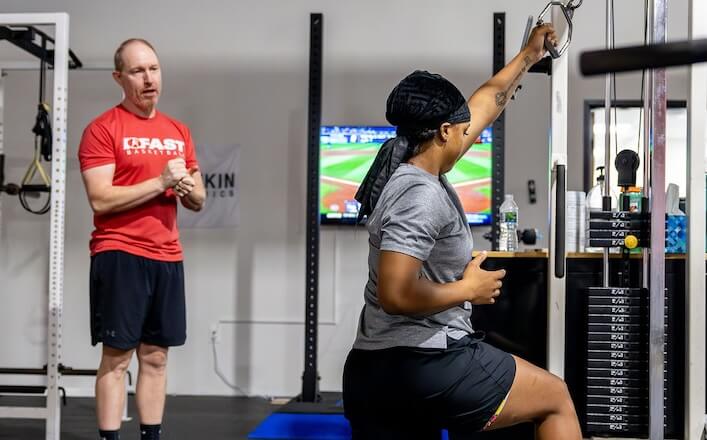
So the other day I’m traveling for work, and while I’m sitting at the airport I spontaneously blurt this out on Instagram…
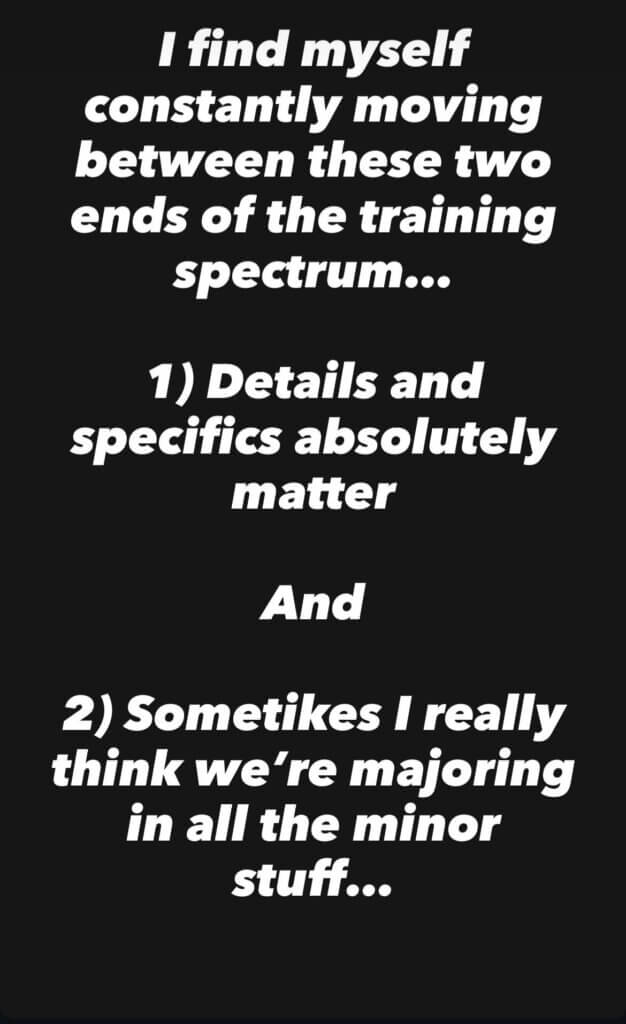
(And a big shout out to the autocorrect/spellcheck on my phone that somehow thought I WANTED to say “sometikes”…🙄🤦🏼♂️)
Anyway while I think it fairly represents how I feel about training, I’ll admit…
…I was SHOCKED how much positive feedback I got from it.
It wasn’t just the fact that people “liked” it, but it was how many people commented and said they feel the exact same way!
Strength coaches.
PT’s.
And some people who just follow my life/work and could relate to it in areas of their own life.
So I figured if there’s that much interest, I should probably dig a little bit deeper, explain my thoughts and provide some context.
Let’s go!
The Continuum Concept
I’ve talked for the bulk of my coaching career about the “Continuum Concept.”
For instance, 20 years ago it was really easy to go online and bully somebody into believing that your way of training was THE ONLY way to do things.
- “Everyone has to squat, bench and deadlift.”
- “Your spine should never bend, ever. Neutral spine is life.”
- “Either you’re sprinting or your walking – there is no in between.”
Now I’ll admit those examples are a little bit extreme, but hopefully it gets my point across 🤣
While I appreciated where these authors/coaches were coming from, one of the things that always helped me as a coach was to understand that:
- Everyone has a unique perspective and outlook on training, and
- Even if they’ve had success, that doesn’t mean they’re always right – and sometimes the exact opposite opinion can have merit as well!
So how can that be?
How can two things that have so much polarity be true at the same time?
Enter the continuum concept.
Like most things in life, there isn’t a right or wrong answer.
Instead, there are two ends of a spectrum which ARE black and white, and then most of life ends up in the gray area in between.
In our little world of S&C, examples might include:
- The Squat-Hinge Continuum,
- The Aerobic-Anaerobic Continuum, or
- The Neural-Metabolic Continuum (as popularized by Coach Ian King).
For today’s article, let’s make it super simple and give you two ends of the training spectrum:
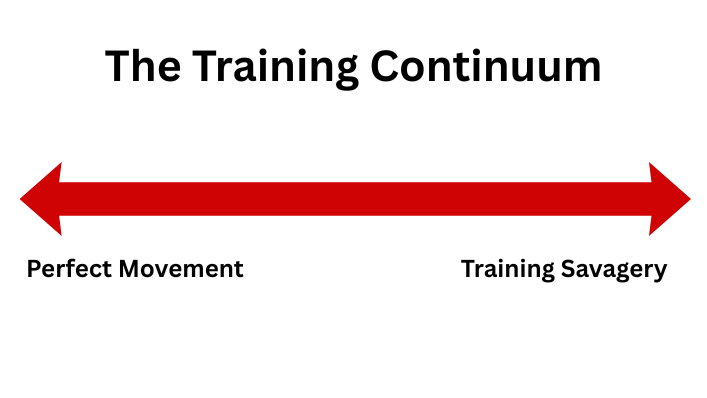
On one hand, we have mobility/movement capacity/”perfect movement”, and on the other, we have just getting in the gym and getting after it.
Let’s explore each…
Mobility and Movement Quality
On the left-hand side of our continuum lies our mobility, movement capacity and “perfect movement”.
This is where details absolutely matter.
You’d love to have perfect alignment and posture.
You want that local mobility (or relative motion, ala Bill) so that all those individual bones and joints move the way they’re supposed to.
And you want to make sure that your clients and athletes are locked in on the nuance, details and every little cue you’re throwing their way
And you know what?
This is super important.
Of course I want good alignment, position, and “optimal” biomechanics, because ever since I started writing articles on the Internet back in 2003, I’ve believed in movement efficiency.
But here’s something we absolutely must remember:
There’s no such thing as “perfect” movement!
Heck 25 years into my coaching career, I still have to remind MYSELF of this from time-to-time!
If you read all the Frans Bosch materials, he’ll tell you that even amongst the highest performers in the world, every rep is ever so slightly different from the next.
Furthermore, mobility can – and literally does – change on a daily basis.
Great night sleep? Solid training? Relaxed and refreshed?
I bet you crush those table tests.
But horrible night of sleep? Body feeling beat up? Stressed out and anxious?
Good luck hitting depth in your squat session today buddy!
The point that I’m trying to make here is this:
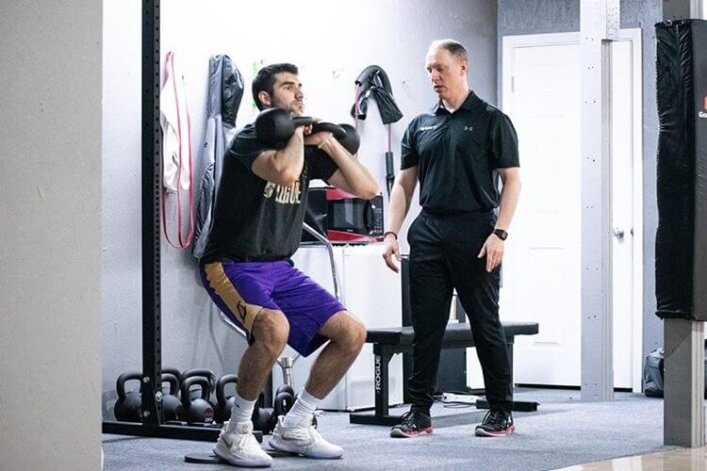
I think we should all aspire to help our clients and athletes move well.
Have a movement model for all the various movement patterns, and aspire to help your clients and athletes move toward it.
Coach and cue them each and every session.
And overall, I’m a huge believer that our people should move well first, before we start adding intensity and load.
But is that the end of the story?
Not by a long shot…
Training Like a Savage
Here’s the thing with the whole “perfect movement,” “optimal mobility” thought process if left alone…
…it’s a trap.
(Cue the Admiral Ackbar for all my Star Wars nerds out there.)
“Perfect movement” or “optimal mobility” is kind of like the horizon…you can walk towards it for weeks, months, maybe even years on end only to realize you’ll never actually get there!
But what’s worse is that when you focus all your time and energy to just “moving well,” I think you miss out on a ton of other great benefits afforded from working out.
The longer I do this, the more I think of 3 key physical areas everyone should be focusing on:
- Mobility and Movement Capacity,
- Force Production, and
- Conditioning.
Development of each of these areas can create a “Buffer Zone” to help not only keep us safe and healthy, but increase our resilience as well.
Let’s circle back to mobility and movement capacity for a moment, and assume that you have a client/athlete whose squat technique is a 3/10.
Like it’s REALLY bad, and they’re at risk of injuring themselves any time they try and perform a squat in the gym.
To be a functional human who can squat proficiently, let’s say you need to be a 5, so you dedicate some time and energy to improving that squat pattern.
Now here’s where the “Buffer Zone” thought process comes into play:
Just getting to 5 isn’t quite good enough.
Because what happens if training slows down a little bit?
Or if they hit a stressful patch in life that robs them of some of that mobility?
Enter the buffer zone…
A buffer zone is development of any physical quality (mobility, force production, energy production) beyond what would normally be required to perform said task.
This buffer zone gives us “a little bit more” mobility, force production, conditioning, etc. that helps keep us safe and healthy in times of extreme stress or strain.
Now what’s cool is you can apply this same concept to building any physical quality for any type of athlete, but let’s go back to our squatting example.
To give this client a buffer zone for their squat, you make it a goal to make them a super solid 7.
You create a great plan, they work hard, and after a few months you achieve that goal.
You’re feeling good about life – congrats!
But here’s the thing – if left unchecked, this is where you fall into the “perfect movement” trap.
We immediately assume that if a 7 is good, well then hell, an 8, 9 or 10 would be even better.
PERFECT SQUATS FOR EVERYONE!
But it’s a fallacy.
Because the amount of training resources and energy required to develop that “Perfect Squat” starts to detract from our development of other physical qualities.
Instead of trying to make that squat an 8, 9, or 10, we could’ve been progressively overloading that squat pattern to build muscle mass, strength and power in our lower body.
And look – while I love and admire anyone who tries to coach and cue at a high-level, we all have to realize there’s a point of diminishing returns.
Yes, sometimes their pelvis is going to dump forward a little bit.
Yes, sometimes they’re going to shrug more than we’d like when they reach and row.
And yes, sometimes that knee might turn in the slightest bit when we’re performing heavy leg work.
However, I’d argue that the improvements we can make in strength, power, conditioning, and other physical qualities helps make a more truly resilient athlete – not constantly chasing the elusive “perfect movement.”
Sure, movement may not be perfect, but it’s a solid 8 out of 10.
And when you take that 8/10 movement score and pair it with…
…strength that’s an 8/10…
…power that’s an 8/10…
….and conditioning that’s an 8/10, you’ve just created a savagely resilient and robust athlete.
The opposing viewpoint (taken to an extreme) has us wrapping our clients/athletes in bubble wrap, coddling them with baby weights, and forever chasing that impossible goal of “perfect movement.”
Closing Thoughts
So if you read this article and think to yourself “Damn this sounds a lot like me,” here’s the good news…
…I think you’re doing this training thing absolutely right.
If you think all you need is “perfect mobility” or “optimal mobility,” you’re leaving gains on the table.
And if you live and die by the saying that “Strong things don’t break,” well that’s true…until they do.
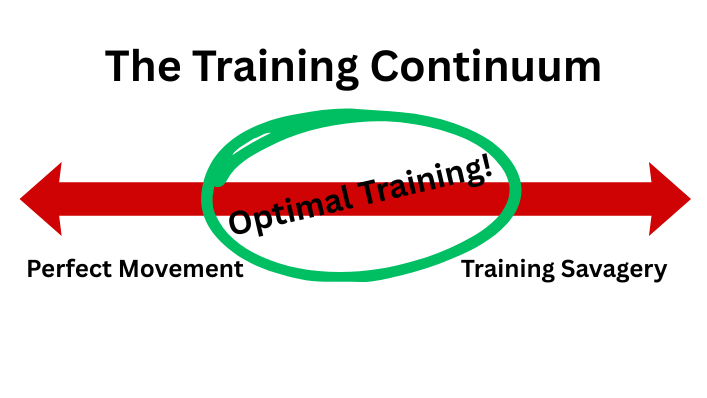
Instead vacillating between the optimal movement/mobility and force production ends of the spectrum helps keep you grounded, centered, and focused on building a resilient, robust and savage human being.
So kudos to all of you who are in the game and really doing this thing.
No one said it would be easy, but I appreciate everyone who is out there putting in the work every single day! 🫡
All the best,
MR
BTW if you enjoyed this article and want to learn more about what I do, here are a couple ways to get started…
#1 – New here and want to get the ball rolling? Check out my Starter Products.
#2 – Want my COMPLETE coaching system? From assessments, to program design, to coaching and cuing? Check out my Complete Coach Certification.
#3 – Want to be an ELITE program designer? Learn more and apply for my RTS Program Design Mentorship here.