


Over the past 25 years, I’ve written in-season training programs for athletes of virtually every shape and size.
From the NBA or MLS All-Star, to the up-and-coming high schooler who wants to get that D1 scholly, I’d like to think I’ve seen tons of different situations and environments.
But if I’m being honest, at the start of this process, it was ROUGH.
I made a lot of mistakes along the way.
And as I’ve mentored more and more coaches over the years, I see a handful of mistakes that – if addressed – can make a profound impact on how your athletes move, feel and perform over the course of the competitive season.
So before we go any further, one thing I’m going to try and start doing in all my articles is give you a couple key points up top.
Little teasers, if you will, of what’s to come.
So let’s start there!
3 Key Takeaways
As you read this article, there are three things I want you to remember…
- In-season strength/performance training can be incredibly valuable IF you do it right.
- The goal isn’t to be dominant in the weight room, but on the field, court or pitch.
- As a strength coach you aren’t the show, you’re support staff – so make sure you’re doing everything you can to SUPPORT your athlete!
Now with that being said, let’s talk about some of the most common mistakes I see coaches make when it comes to in-season programming.
Mistake #1: Assuming Athletes Can NEVER Strength Train In-Season
The first mistake I see is when coaches immediately assume that if you’re in-season, you simply can’t work out.
Now sometimes I see this on the S&C side, but I definitely tend to see it more on the sport coaches side.
And on one hand, I get it – you want your athletes to be fresh and ready for the games.
Because the ultimate goal is to play well and win!
However, simply stopping workouts cold turkey for 2, 3, or maybe even as long as 4 months is going to have negative consequences.
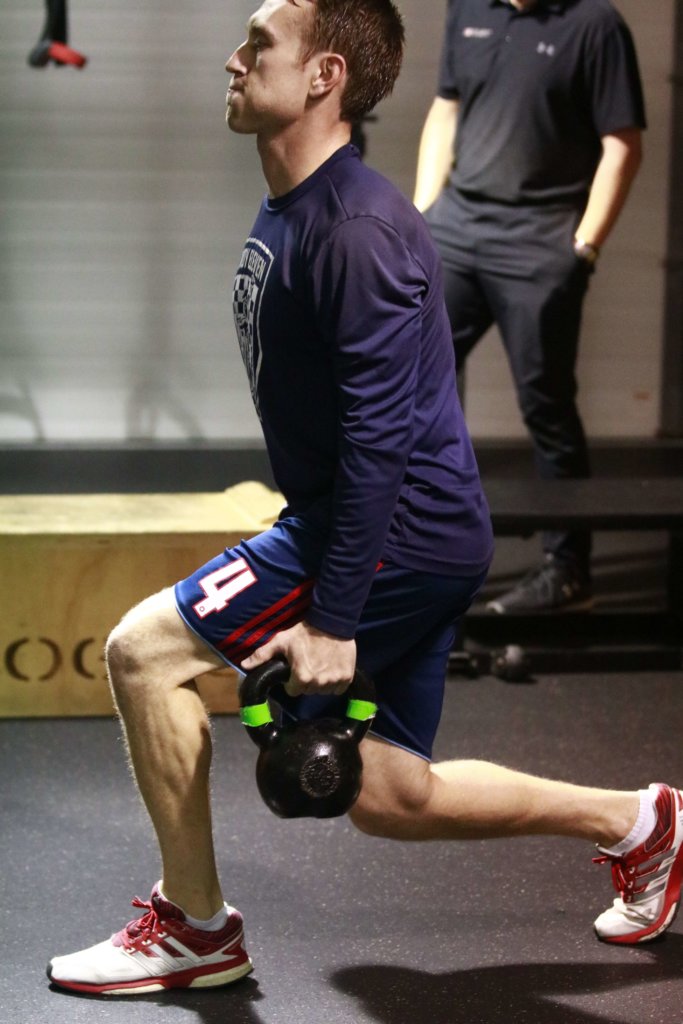
Whether it’s a reduction in speed and power development, loss of strength, or a reduction in lean body mass, I think it’s imperative that we find windows of time where we can train throughout the competitive season.
A great example here is collegiate soccer.
If you zoom in and don’t really pay attention, it might appear as though you have 2 games per week, every single week.
However, while that’s true in many instances, there are also specific weeks where you only play once every 7-8 days…
…and THOSE are the windows where you have to sneak your strength work in!
Here’s a practical example from a high school basketball player I’m working with, starting with just his game schedule.
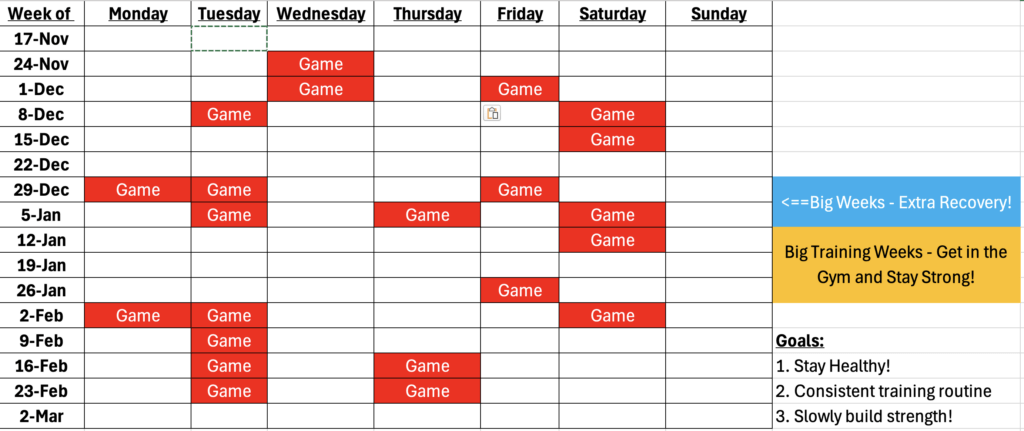
And now here’s how I approach this…
- Weeks of 11/24-12/15: We’re just trying to accommodate to the game schedule and sneak strength work in when we can.
- Weeks of 12/29 and 1/5: Heavy game density/loading, so we’re putting a big emphasis on recovery.
But then those weeks between 1/12 and 1/26? Where the competitive schedule is light?
We’re going to spend some extra time in the weight room to maintain that strength, top it off, and be ready to finish the season STRONG.
You always want to be peaking when tournament time hits, so make sure you’re finding ways to get – and stay – in the weight room throughout the competitive season.
Your athletes may not love it in the moment, but they’ll thank you in the end!
Mistake #2: Loading All Athletes the Same
I realize I’m probably preaching to the choir here, but let me tell you a little story about an athlete from years past.
High school basketball player, D1 recruit, and getting looked at by all the major colleges in the country.
Now you think you’d want to take care of that guy. Right?
Make sure you push and develop him, but also make sure he plays at a high-level every night he steps on the court.
Right?
RIGHT?!?!?!
So why on Earth was this kid maxing out, ON GAME DAYS, with a barbell back squat like the rest of his high school weights class?
Come on friends – this is common sense.
Please. Stop.
As my good friend, the infamous Joe Kenn is apt to say:
Words Win.
As in, the WORD is WIN.
And winning occurs on the field, court or pitch – not some arbitrary record board in the weight room!
If you’re training in-season athletes, find a way to stratify or “bucket” them based on their usage/playing time.
A simple heuristic could look like this:
- Starters/high minute players,
- Subs/rotation players, and
- Developing or bench players.
If you’ve ever played sports, and you pair that with a small dose of common sense, you realize you can’t (or shouldn’t) treat all these players the same.
When you bucket your athletes, you can you take one workout and customize the volume and intensity – dialing it up or down – to make sure every athlete is getting exactly what they need.
It’s a simple adjustment, but it can make a profound impact on how your athletes feel over the course of the season!
Mistake #3: Relying SOLELY on Heavy Strength Training In-Season
Another common mistake I see is having the “hammer” approach to in-season workouts.
I’m sure you’ve heard the saying before…
“If your only tool is a hammer, everything looks like a nail!”
Well I see this all the time with in-season workouts, where coaches feel compelled to crush their athletes in the weight room.
Instead, what if we had various training days and workouts, based on where they’re at in their competitive cycle?
For example, when I write in-season workouts I have four different types of workouts I use:
Loading Days: These are our heaviest strength training workouts, and generally placed the furthest away from game days. Here we’re actually chasing a strong adaptation (strength, power, hypertrophy, etc.)
Maintenance Days: These are lighter strength training days, with an emphasis on concentric-focused activities. You can still “train,” but with less overall demand and less likelihood of soreness.
Stim Days: Typically done the day before a game, these are here to make athletes feel fresh, fast and explosive.
Recovery Days: Just like the name sounds, the goal here is to kick-start the recovery process and get the athlete back to baseline ASAP.
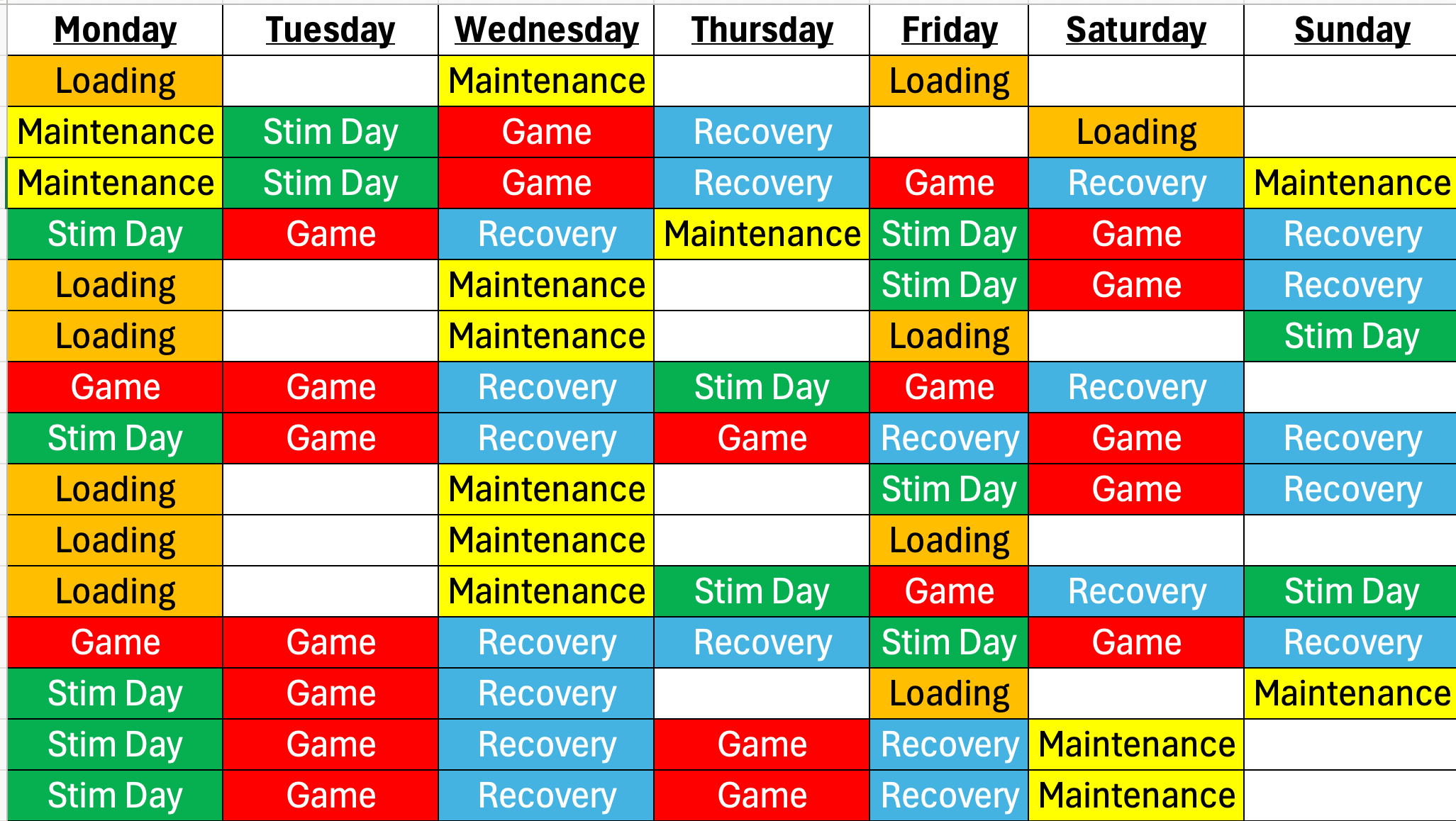
And here’s how that might look over an entire in-season program.
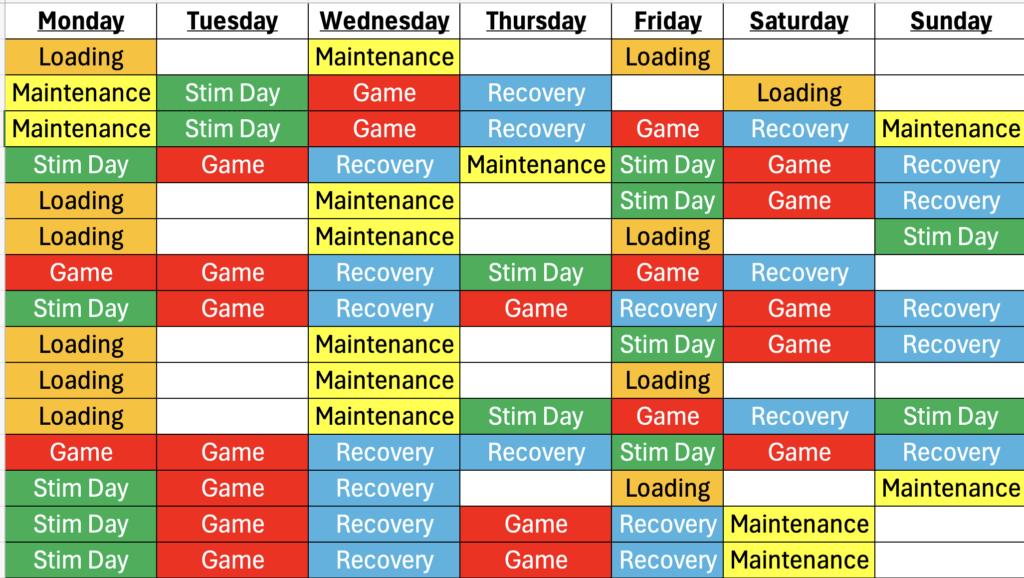
I’m a big believer that staying consistent in the weight room not only builds physical abilities (speed, strength, power etc), but also helps athletes move better and maintain their movement variability throughout the season as well.
More reps in the gym with you is definitely a good thing…as long as you’re mixing things up and meeting them where they’re at in every workout!
Mistake #4: Prioritizing Physical “Development” Over Performance
This final mistake may require a few of us to take a good, hard look in the mirror.
If you’re more focused on how an athlete looks…
…or how much weight they’re lifting in the gym…
…versus how they’re actually performing on the field, court or pitch, it’s time to check yourself.
And trust me my friend, I get it.
I’ve been there myself.
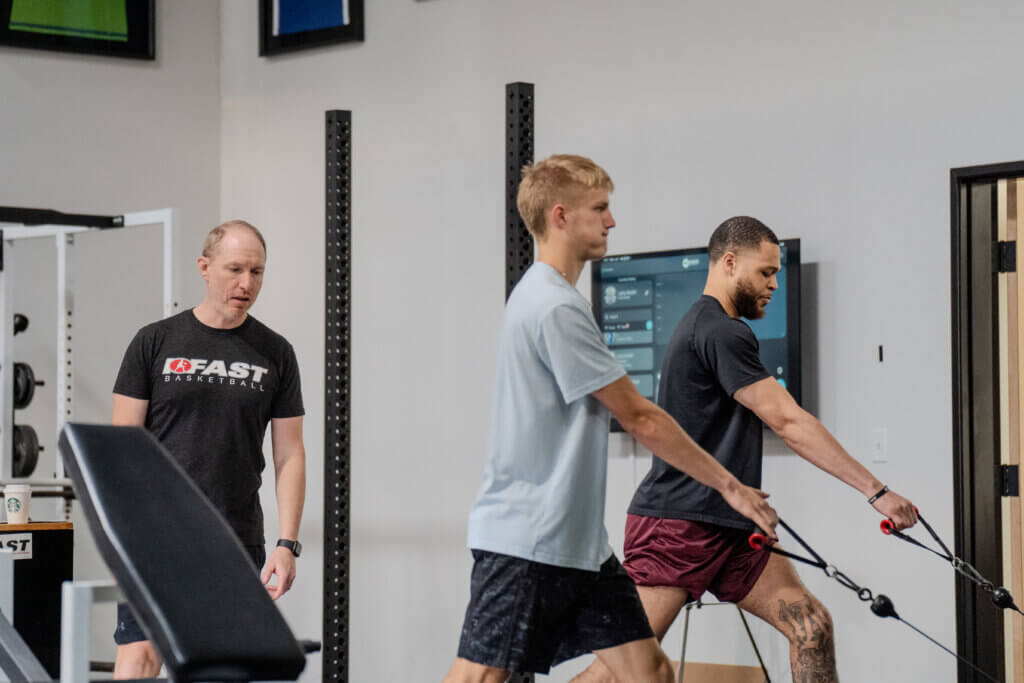
As a strength coach, you want to help your athletes get get bigger, faster, stronger.
It’s well-intentioned.
And yes, those things can absolutely move the needle.
But just remember that performance training is a means to an end.
Sure you might help them achieve those goals, but especially in-season, it shouldn’t come at the expense of being fresh and healthy on game day!
Instead, ask yourself these questions:
- How does my athlete feel on a day-to-day basis ?
- How are they performing, both in practices and games?
- And do they feel ready to dominate when game day comes around?
And if you’re not getting the answers you want, it may be time to re-think your plan.
One thing that helped me early-on in my career was to stop calling myself a “strength coach,” and replaced it with the title of “performance coach.”
Immediately, it shifted my thought process from “My job is to help this athlete get stronger,” to “How do I support this athlete and help them improve their performance?”
Again, it’s a subtle shift – but it makes all the difference in the world.
Summary
So there you have it my friend, four common mistakes I see with in-season training.
Are you making any of them yourself?
Or HAVE you made them in the past?
Either way, it doesn’t matter now.
Instead, the goal is reflect on your work, see what’s worked, and what you can do to continue to tweak and refine your approach in the future.
And if you’re as fascinated by in-season programming as I am, be sure to check out my Ultimate Guide to In-Season Programming.
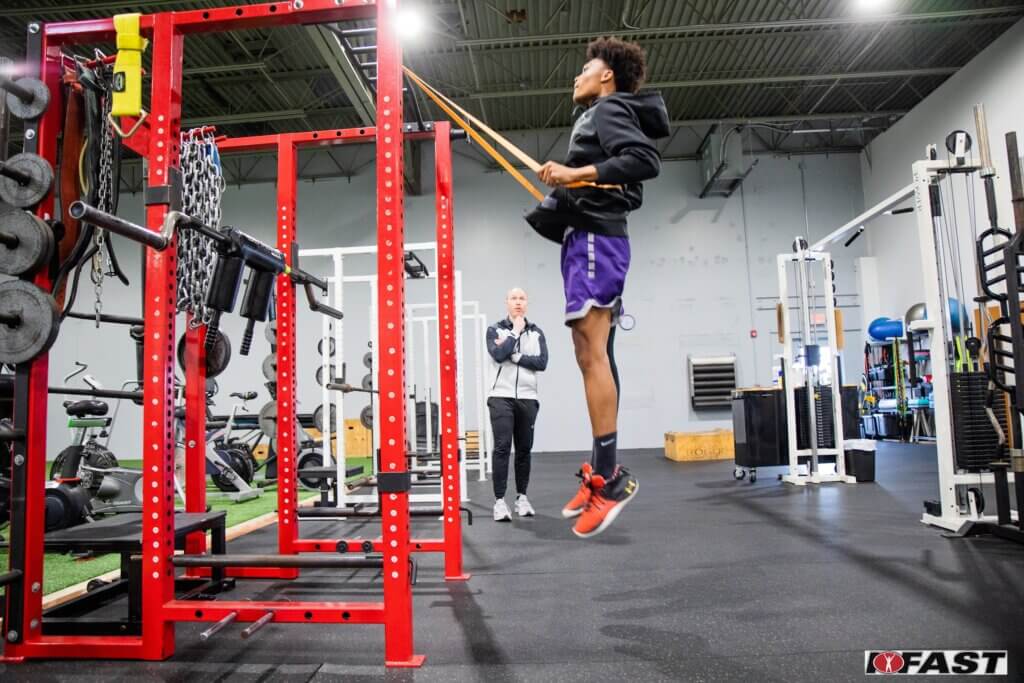
Here, I’ll take you step-by-step through my process, explain all the training days, and walk you through examples to help make sure you’re writing ELITE in-season programs.
Learn More: The Ultimate Guide to In-Season Program Design
As always, thanks so much for your support and let’s MAKE IT a great day!
All the best,
MR