


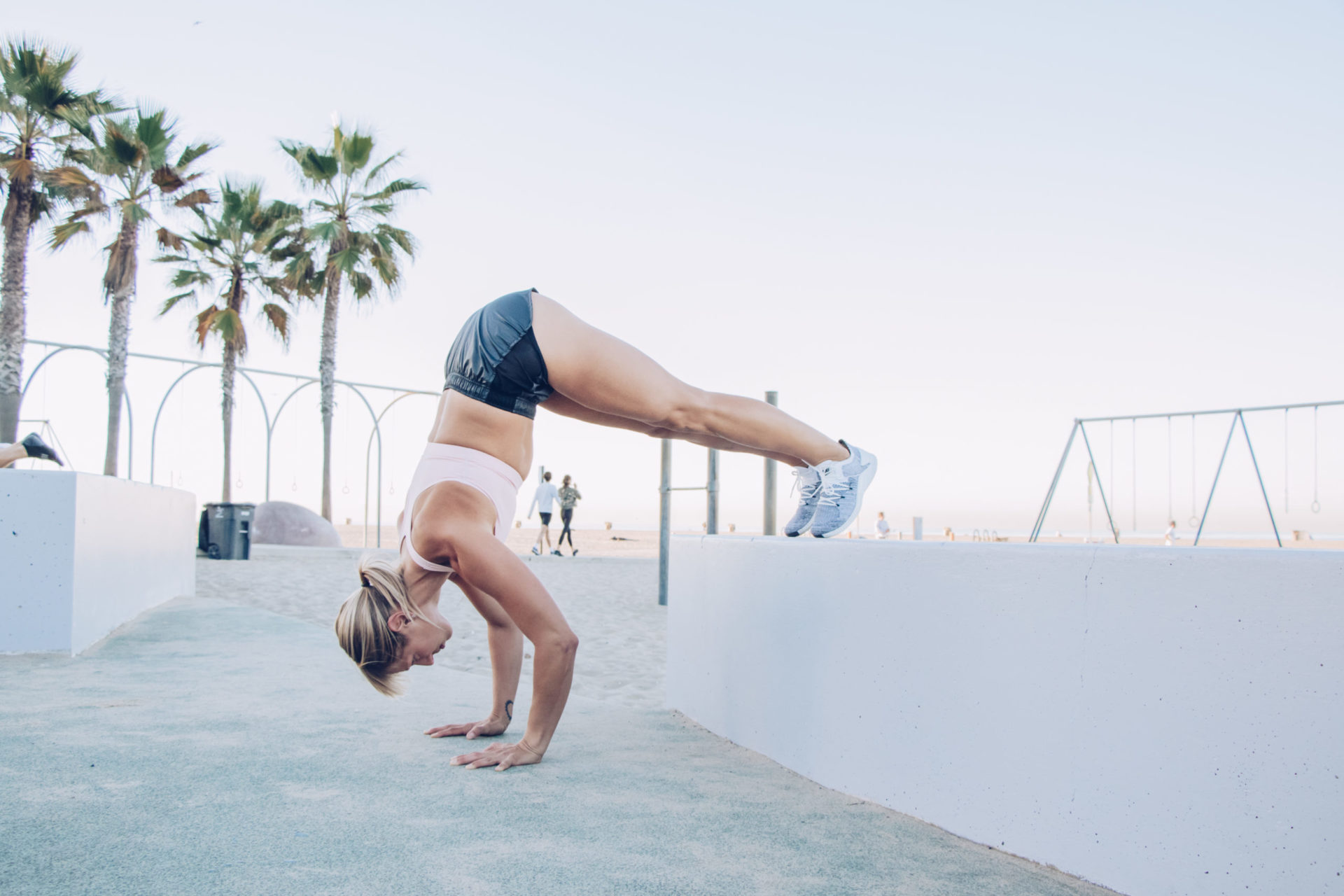
When I first started 12 Minute Athlete, my entire mission was simple: You don’t need a gym to get incredibly strong.
Back then, I trained in my living room, in tiny apartments, in hotel rooms, outside in parks — anywhere I could clear a few feet of space. I didn’t have money for a gym membership or equipment, so I used what I had: my bodyweight, a timer, and some grit.
And honestly? It worked. Better than I could have imagined.
Even now — years later, with access to full gyms, barbells, cables, kettlebells, turf, sleds, the whole thing — I still believe one simple truth:
You can build serious strength and athleticism with just your bodyweight.
And you can do it anywhere.
Do I sometimes go to the gym now? Sure. Mostly because I like having somewhere to go. It changes the scenery, it keeps me sane between writing sessions, and honestly, after COVID wiped out all my variety, I enjoy the energy.
But the gym is optional. The ability to get strong? Not optional.
Here’s why bodyweight training gives you everything you need — and how to structure it so you keep getting stronger, no matter where you are.
1. Bodyweight strength is real strength
There’s this idea that to get strong, you have to lift weights.
Weights are an amazing tool, yes, but they’re not the only way — and they’re definitely not the foundation of strength.
Your own bodyweight can take you incredibly far:
- Push-ups → horizontal pressing strength
- Dips → triceps + shoulder stability
- Pull-ups → upper body pulling power
- Single-leg squats → leg strength + balance
- Handstands → shoulder strength + core control
- Hollow/arch work → full-body tension
Bodyweight training builds functional strength — the kind you use in sports, real life, and dynamic movement. It forces your core to work, your stabilizers to fire, and your brain to coordinate your entire body as one unit. (It’s the reason why people ask me how got so strong in jiu-jitsu!)
And you never lose strength when you travel, when you’re busy, or when life gets chaotic.
You always have your body. You really can work out anywhere.
2. You can create infinite resistance — no dumbbells required
People often think bodyweight means “too easy.” Trust me: it can get very hard.
- Try slow eccentric push-ups.
- Try single-leg squat progressions.
- Try handstand push-ups.
- Try slow, controlled hanging leg raises.
- Try a two-minute jump rope finisher without stopping.
You don’t need equipment. You need creativity and progression.
Here are simple ways to progressively overload bodyweight movements:
- Increase the range of motion (deficit push-ups)
- Slow the tempo (3–5 second lowers)
- Add pauses (hold bottom position)
- Increase instability (single-leg variations)
- Increase volume (more sets/reps)
- Decrease rest (HIIT-style)
- Add external load from household items
Strength = tension over time, not equipment.
3. Your “equipment” is already in your house
If you want to increase difficulty, you don’t need gym gear — you just need everyday items.
Try this:
- Fill a backpack with books → squats, lunges, step-ups
- Use a sturdy chair → dips, decline push-ups, split squats
- Use a towel → hamstring sliders, row variations
- Use a wall → handstands, wall sits, incline push-ups
- Bring a jump rope → conditioning anywhere
- Bring resistance bands → 100+ variations
- Use stairs → explosive power and conditioning
When I traveled constantly early in my fitness career, I did entire workouts using nothing more than a jump rope, a wall, and a backpack stuffed with whatever I had. And I got stronger.
That’s the magic of bodyweight training—it’s portable strength.
4. Calisthenics builds the kind of strength machines can’t
Gym machines isolate muscles. That has its place. But calisthenics teaches control.
You learn how to:
- use your whole body as a unit
- generate tension and stability
- lock in core engagement
- create strength through range
- move with power and athleticism
This is the kind of strength that translates to jiu-jitsu, running, hiking, climbing, handstands — everything.
Calisthenics also teaches patience. Mastering a pull-up or pistol squat is deeply satisfying in a way that weight machines can’t replicate. It forces you to earn strength through skill (my favorite!).
5. A simple anywhere bodyweight strength routine
Here’s a structure you can use anywhere — at home, in a hotel, or in a tiny Airbnb:
Warm-up (2 minutes):
March/jog in place, arm circles, hip openers.
Strength block (8 minutes):
Do a few rounds of:
- Push variation (push-ups, dips, deficit push-ups)
- Pull variation (towel rows, doorway holds)
- Leg variation (split squats, step-ups, jump squats)
- Core variation (planks, hollow holds, V-ups)
Optional conditioning finisher (2 minutes):
Jump rope, mountain climbers, burpees, or high knees.
Ten to twelve minutes. Zero equipment. Full-body strength and conditioning. (Or check out the 12 Minute Athlete app if you don’t already have it!)
You Really Can Build Strength Anywhere
Gyms are great. I like the energy, the routine, the variety. But I don’t need a gym. And neither do you.
If you have your body, you have everything you need to get strong — really strong. You can build muscle, power, endurance, stability, and athleticism anywhere.
Bodyweight training isn’t a backup plan. It’s a foundation. And it’s one of the most freeing, empowering ways to stay strong for life.